
[favorite_button]
What actually is AI?
Summary
What actually is AI?
We hear more and more about the use of artificial intelligence (AIAI – artificial intelligence More), especially in autonomous driving. But what is it actually?
AIAI – artificial intelligence More, simply explained, is the attempt to transfer human learning and thinking to computers, thus giving them ‘intelligence’. AIAI – artificial intelligence More usually describes computer programs that can learn to find solutions. Instead of being programmed for every purpose, an AIAI – artificial intelligence More can find answers on its own and independently solve the problem it learns.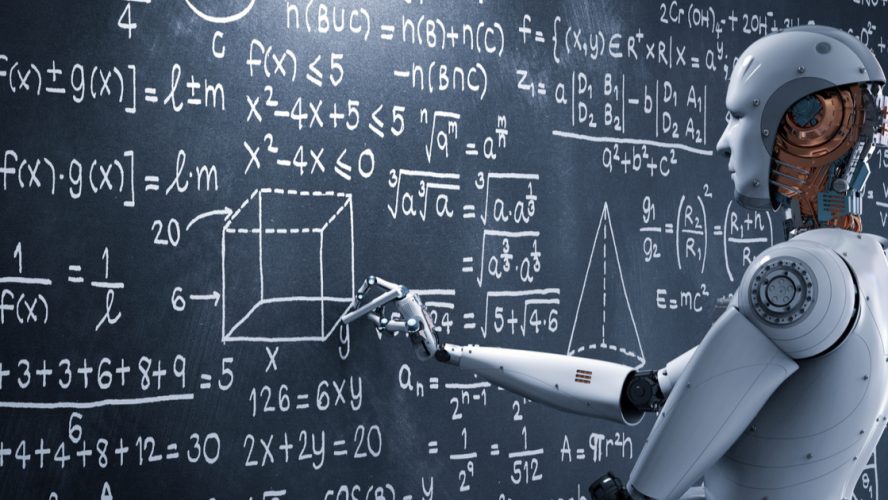
There is a distinction between strong AIAI – artificial intelligence More and weak AIAI – artificial intelligence More when it comes to defining AIAI – artificial intelligence More. Simply explained, strong AIAI – artificial intelligence More would be computer systems that can do the work of completing difficult tasks on par with humans. A machine that can solve problems of a general nature – that is still pure fantasy.
We are dealing with weak AIAI – artificial intelligence More, on the other hand, in everyday life: These are algorithms – and an AIAI – artificial intelligence More is nothing else, a very complex algorithms – that can answer specific questions whose solution paths they have learned beforehand. An AIAI – artificial intelligence More has no consciousness of its own and shows no deeper understanding of intelligence.
Examples of AIAI – artificial intelligence More...
Like what you see?
Then log-in to unlock all the content or become a member of Carmunication today!
What actually is AI?
We hear more and more about the use of artificial intelligence (AIAI – artificial intelligence More), especially in autonomous driving. But what is it actually?
AIAI – artificial intelligence More, simply explained, is the attempt to transfer human learning and thinking to computers, thus giving them ‘intelligence’. AIAI – artificial intelligence More usually describes computer programs that can learn to find solutions. Instead of being programmed for every purpose, an AIAI – artificial intelligence More can find answers on its own and independently solve the problem it learns.
There is a distinction between strong AIAI – artificial intelligence More and weak AIAI – artificial intelligence More when it comes to defining AIAI – artificial intelligence More. Simply explained, strong AIAI – artificial intelligence More would be computer systems that can do the work of completing difficult tasks on par with humans. A machine that can solve problems of a general nature – that is still pure fantasy.
We are dealing with weak AIAI – artificial intelligence More, on the other hand, in everyday life: These are algorithms – and an AIAI – artificial intelligence More is nothing else, a very complex algorithms – that can answer specific questions whose solution paths they have learned beforehand. An AIAI – artificial intelligence More has no consciousness of its own and shows no deeper understanding of intelligence.
Examples of AIAI – artificial intelligence More projects
– Face recognition on social networks / recognition of handwriting
– Voice assistants (simultaneous) on mobile phones
– advertisements displayed to us while surfing the internet
– Hoover robots
– Smartphone cameras
– Navigation systems find the optimal route
– expert systems (‘intelligent’ repair instructions and fault trees)
– and autonomous drving
Currently, we are on the threshold of a new higher intelligence that can be used for good or for bad.
Artificial intelligence is a key technology with high disruptive potential for all sectors of the economy. Companies are therefore well advised to gain experience as early as possible.
Details
What makes an AIAI – artificial intelligence More?
What distinguishes an AI from a simple programme?
Usually, you write code that consists of a set of arbitrarily complex instructions:
– If this, then that
– For example: If the user presses “Send”, send the email to server X
Such a system is also called rule-based. With an artificial intelligence, every single step is not predetermined, but an algorithm is written that is  capable of creating these steps on its own. An AIAI – artificial intelligence More usually does not write its own code but changes certain parameters within its code to find general patterns in data.
In classical programming, the programmer determines what the programme does under what conditions. With machine learning, an artificial intelligence learns to recognise correlations and patterns based on data and even gets better at it over time.
Why is this important? Because certain problems are so complex that it is impossible to write code for them by hand. AIAI – artificial intelligence More algorithms can recognise and reproduce a state of affairs or conditions very accurately based on data.
Anyone looking for possible, useful use cases for their company is quickly overwhelmed. A grid of three categories helps with orientation.
Because the answer to the question “What should or can an AI do for us?” is: assess, conclude or act.
Assess: Describe what is
A typical example is the interpretation of incoming invoices for further posting. Detecting anomalies in large amounts of data from production also falls into this area. Image recognition methods are also part of this. If a AIAI – artificial intelligence More takes over the visual inspection of components, this relieves skilled workers and at the same time improves quality: defective parts are not installed in the first place, and defective products are not sold. AIAI – artificial intelligence More can also evaluate tons of sensor data virtually in real time and correlate them with quality control results. In this way, not only are product faults detected more quickly and rejects limited, but valuable recommendations for the operating parameters are also generated.
Conclusion: Recognising what is becoming
The further analysis of data is also increasingly carried out by algorithms. Their use in models for predictions or recommendations now goes far beyond the classic predictive maintenance. With the help of an AIAI – artificial intelligence More, sales figures can certainly be forecast and the purchase of long-runners and price-sensitive materials can be better controlled; a big plus in times of stressed supply chains.
Act: Doing what is needed
On a third level, smart systems interact with their environment, learn from the results of their actions and can deduce what needs to be done in the future to achieve the given objective.
The famous case of AlphaGo falls into this category. The self-learning programme made headlines in 2016 when it beat human champions in the Chinese board game Go for the first time.
Today, more and more areas of application can be found in everyday business: for example, when robotic arms learn to grasp previously unknown objects without damaging or dropping them. Or to act directly in collaboration with human colleagues. More widespread use cases in this category are also the aforementioned autonomous driving and the chatbots, which are not always popular with everyone.
more terms
So what is machine learning?
Machine learning is a popular subfield of artificial intelligence and is already used in many everyday situations: from spam filters to product recommendations and weather forecasts to medical diagnoses and voice assistants – all these applications are based on machine learning. IT systems learn to recognise patterns and derive rules with the help of large amounts of data.
Supervised learning
In supervised learning, the system is provided with data and associated information or results. This could be pictures of cats and dogs with the information that the respective picture is a cat or dog. The AIAI – artificial intelligence More analyses the images for similarities and differences between the respective categories and can make a prediction about whether the image is a cat or a dog if the image is unknown to it.
Unsupervised learning
In unsupervised learning, there is no mapping yet – Instead, the AIAI – artificial intelligence More analyses the images for commonalities and categorises them according to these. This is mainly used when we first want to gain new insights through AIAI – artificial intelligence More, for example in medicine. For example, an artificial intelligence sorts images of patients’ retinas according to recurring patterns.
Deep Learning
Just as machine learning is an area of artificial intelligence, deep learning is an area of machine learning. In Deep Learning, data passes through several “layers” of an AIAI – artificial intelligence More neural network. This neural network is modelled on the human brain and assigns different weights to different pieces of information.
The complexity of deep learning usually requires much more powerful computers than simple machine learning and requires much more data. However, the data does not necessarily have to be prepared by humans beforehand so that the artificial intelligence can process it. Deep learning is also used for image recognition, but also for very complex applications such as speech recognition or autonomous driving.
Sources

Written by Carmupedia Editorial Office
You might also be interested in








Please rate this article
Let us know if you like this article by leaving a rating. Don't worry, it's super easy.
Placeholder
Manage my notifications
Your member panel
From here you have full control over your profile
My bookmarks
[user_favorites]
[clear_favorites_button]
Are you missing something here?
0 Comments