
[favorite_button]
new business case – vehicle functions by subscription
Summary
Subscription models are setting the trends
More and more vehicle manufacturers are offering subscription models for additional vehicle functions.
Examples:
- At Mercedes-Benz USA, better acceleration (“Acceleration Increase”) is now available for EQS and EQE for $1,200 in an annual subscription. (acceleration of 0.8 to 1.0 seconds (0-100 km/h)
- In europe, Mercedes-Benz offers in the ‘mercedes me’ store functions such as Remote Parking Assist, Adaptive Highbeam Assist, rear-axle steering with a large steering angle, etc.
- BMW, for example, offers heated seats or steering wheel heating as a monthly subscription.

- AUDI, with “Functions on Demand”, offers e.g. 2-zone climate control, matrix light, high beam assistant, driving assistance systems, digital radio etc. by subscription.
- At Tesla, basic functions such as navigation, voice control or WLAN-Access are now only offered by subscription (this means also: no more information about Supercharger charging space availability)
- ….. and even motorcycle builders are now jumping on the train. For a fee of around $1,800, buyers of a 2022 SR from Zero Motorcycles can increase power from 74 hp to 113 hp via a software upgrade.
Numerous advantages for car manufacturers
From a carmaker’s point of view, this has a certain charm: instead of having to complexly assemble each new car with the various options from 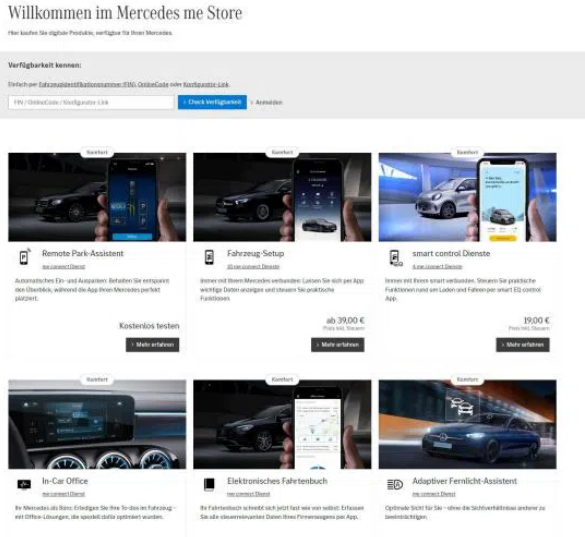 the accessories catalog according to the customer’s wishes (e.g. there would be no need to make a seat without heating at all if...
Like what you see?
Then log-in to unlock all the content or become a member of Carmunication today!
Subscription models are setting the trends
More and more vehicle manufacturers are offering subscription models for additional vehicle functions.
Examples:
- At Mercedes-Benz USA, better acceleration (“Acceleration Increase”) is now available for EQS and EQE for $1,200 in an annual subscription. (acceleration of 0.8 to 1.0 seconds (0-100 km/h)
- In europe, Mercedes-Benz offers in the ‘mercedes me’ store functions such as Remote Parking Assist, Adaptive Highbeam Assist, rear-axle steering with a large steering angle, etc.
- BMW, for example, offers heated seats or steering wheel heating as a monthly subscription.
- AUDI, with “Functions on Demand”, offers e.g. 2-zone climate control, matrix light, high beam assistant, driving assistance systems, digital radio etc. by subscription.
- At Tesla, basic functions such as navigation, voice control or WLAN-Access are now only offered by subscription (this means also: no more information about Supercharger charging space availability)
- ….. and even motorcycle builders are now jumping on the train. For a fee of around $1,800, buyers of a 2022 SR from Zero Motorcycles can increase power from 74 hp to 113 hp via a software upgrade.
Numerous advantages for car manufacturers
From a carmaker’s point of view, this has a certain charm: instead of having to complexly assemble each new car with the various options from the accessories catalog according to the customer’s wishes (e.g. there would be no need to make a seat without heating at all if the use of the function can be enabled online later), all vehicles could be produced with full equipment and only the functions ordered by the customer would initially be activated. If the buyer himself does not subsequently decide for a particular feature, there is still the option of generating further sales with the buyer of the used vehicle. Thanks to the pre-installed hardware, not even an expensive workshop visit is required; a simple OTA software update would suffice.
Response to date very differentiated
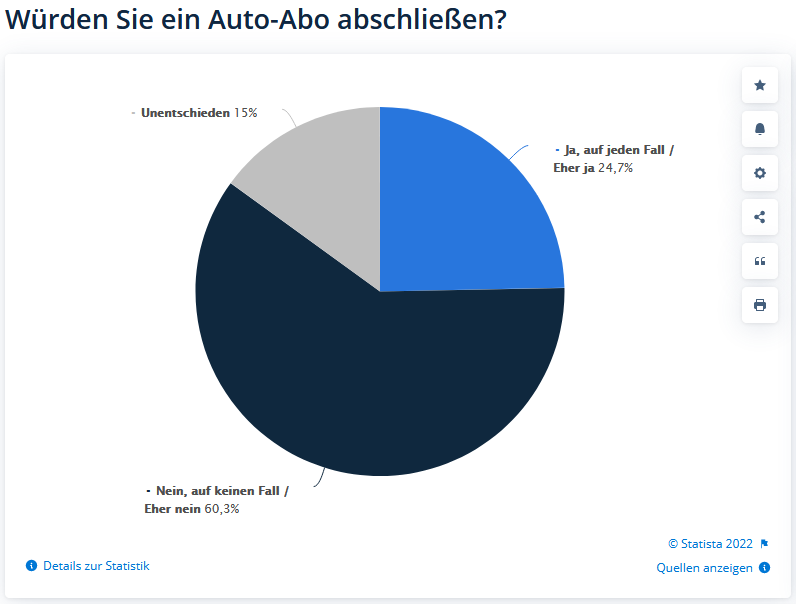
- This approach is currently the subject of much criticism in the social networks. Users accused the manufacturer of wasting money and materials because hardware is factory-installed in vehicles and may never be used.
- In the future, the decision for or against a feature no longer has to be made in advance – and the probability is high that sooner or later
 everyone will think to themselves, “I’ll just try that now!” It is precisely this psychological component that plays an elementary role in subscription models. 2,000 euros more for some assistance system or 1,500 euros more for an extended 10-degree rear-axle steering system? Many would probably do without that initially. But once they have the car and know that they can activate these features on a trial basis for 30 or 50 euros a month, the inhibition threshold drops significantly. At the same time, the likelihood increases that the special equipment will be permanently activated by a one-time payment if they like it.
 - There is also a risk that an emerging industry of hackers and tuners will offer illegal? and possibly dangerous? solutions in the future. The argumentation here: Whoever has paid for a car is the owner and may do with it as he pleases. The manufacturers counter with a possible expiration of warranty claims. In the case of fully networked vehicles that are in constant contact with the brand’s own cloud, the allegedly illegal activations are quickly discovered anyway and could theoretically be simply undone by resetting the factory settings.
- Last but not least, it should not be forgotten that most new cars come onto the market as leased vehicles. Their residual value is largely determined by the optional equipment selected at the time of purchase. But if assistance systems and steering wheel heating can now be easily activated at a later date, this opens up completely new opportunities on the used car market.
 everyone will think to themselves, “I’ll just try that now!” It is precisely this psychological component that plays an elementary role in subscription models. 2,000 euros more for some assistance system or 1,500 euros more for an extended 10-degree rear-axle steering system? Many would probably do without that initially. But once they have the car and know that they can activate these features on a trial basis for 30 or 50 euros a month, the inhibition threshold drops significantly. At the same time, the likelihood increases that the special equipment will be permanently activated by a one-time payment if they like it.
Open end, but the car is changing
With the subscription principle for special equipment, manufacturers have come up with a new revenue model that has so far met with mixed reactions from customers. The advantages include increased attractiveness of the vehicles for resale and more efficient production through rationalization. Whether this will ultimately be offset by increased material requirements due to the standard installation of parts that may never be used remains to be seen.
But the bottom line is that automakers have long since made the decision for their clientele: The future belongs to the subscription model.
—————————- Pls leave a comment. Thank you.——————————-
Details
Sources

Written by Carmupedia Editorial Office
You might also be interested in







Please rate this article
Let us know if you like this article by leaving a rating. Don't worry, it's super easy.
Placeholder
Manage my notifications
Your member panel
From here you have full control over your profile
My bookmarks
[user_favorites]
[clear_favorites_button]
Are you missing something here?
0 Comments