
[favorite_button]
in-vehicle data standardization – a long way, first results
Summary
There is still a long way using in-vehicle data. Not only is the number and scope of data points currently still very limited, also the access and use is another major obstacle due to the missing standards. At the moment, there are a number of initiatives and projects to close this gap.
Connected Vehicle Systems Alliance (COVESA)
COVESA,formerly known as the GENIVI Alliance, is an open, collaborative and impactful technology alliance. Significant members are: BMW, BOSCH, GEOTAB, FORD, DENSO, MOBIS, LG, Renault group, Renesas, wndrvr.,…
The intention of COVESA is to provide:
• Methodologies for modeling and cataloging data and services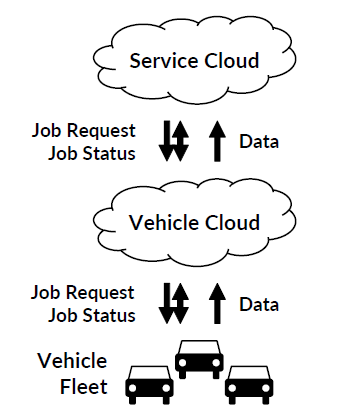
• Connected vehicle architectures
• Common platforms, interfaces, and integration
• Tooling Support
COVESA’s Vehicle Signal Specification (VSS) is a approach for describing vehicle data. VSS is an data standard developed as part of the Connected Vehicle Interface Initiative (CVII), a collaboration between COVESA and W3C. It is based of common vehicle data models, access protocols and standard interfaces between vehicle and cloud.
SENSORIS
SENSORIS –SENSOR Interface Specification – is also an open group of actors from the global vehicle industry, map and data providers, sensors manufacturers and telecom operators (Audi, BMW, Nissan, Renault, ERTICO, BOSCH, Continental, DENSO, AW-AISIN AX, HUAWEI, Knorr-Bremse, LG-E, Valeo, ZF, here, TomTom, IBM, Tencent….) with the intention defining an appropriate interface for exchanging...
Like what you see?
Then log-in to unlock all the content or become a member of Carmunication today!
There is still a long way using in-vehicle data. Not only is the number and scope of data points currently still very limited, also the access and use is another major obstacle due to the missing standards. At the moment, there are a number of initiatives and projects to close this gap.
Connected Vehicle Systems Alliance (COVESA)
COVESA,formerly known as the GENIVI Alliance, is an open, collaborative and impactful technology alliance. Significant members are: BMW, BOSCH, GEOTAB, FORD, DENSO, MOBIS, LG, Renault group, Renesas, wndrvr.,…
The intention of COVESA is to provide:
• Methodologies for modeling and cataloging data and services
• Connected vehicle architectures
• Common platforms, interfaces, and integration
• Tooling Support
COVESA’s Vehicle Signal Specification (VSS) is a approach for describing vehicle data. VSS is an data standard developed as part of the Connected Vehicle Interface Initiative (CVII), a collaboration between COVESA and W3C. It is based of common vehicle data models, access protocols and standard interfaces between vehicle and cloud.
SENSORIS
SENSORIS –SENSOR Interface Specification – is also an open group of actors from the global vehicle industry, map and data providers, sensors manufacturers and telecom operators (Audi, BMW, Nissan, Renault, ERTICO, BOSCH, Continental, DENSO, AW-AISIN AX, HUAWEI, Knorr-Bremse, LG-E, Valeo, ZF, here, TomTom, IBM, Tencent….) with the intention defining an appropriate interface for exchanging information between the in-vehicle sensors and a dedicated cloud.
Details
COVESA
Why VSS – Vehicle Signal Specification ?
Today’s connected vehicles have three or more networks with 70-130 controllers and 50-70 sensors on board, producing over 3,000 individual data points for operating, conveying state of, or otherwise providing information about a vehicle. An average vehicle generates 25GB of data a day and  is capable of transmitting and receiving data to and from the cloud at high speeds by powerful high performance computer (HPCHPC – High-Power-Charger. Charging power up to 950V and 500 Ampere / 450kW More) (see article: The change in the vehicle E/E-Architectures or article: SOVD – Service Oriented Vehicle Diagnostics) over 5G5G is short for “fifth generation”: 5G is set to be as much as 100 times faster than 4G. 5G networks will have greater bandwidth, giving faster download speeds. 5G is the fifth generation technology standard for cellular networks. More or LTELTE – 4G – is the of succession of 3G – with the right provider you can get a download speed up to 500mb/s and a upload speed of 100mb/s More connectivity (see article: 5G5G is short for “fifth generation”: 5G is set to be as much as 100 times faster than 4G. 5G networks will have greater bandwidth, giving faster download speeds. 5G is the fifth generation technology standard for cellular networks. More – That you should know).
However, most of this data are in an organizational (OEMOEM – Original Equipment Manufacturer. More) proprietary data format and it does not conform to a common standard. Once the data crosses organizational boundaries, complex integration and interoperability challenges arise due to lack of common definition and understanding of the data. This costs time and money, degrades quality and limits integration of connected vehicles in adjacent industries.
What is VSS?
The Vehicle Signal Specification introduces a domain taxonomy for vehicle signals. It can be used as standard in automotive applications to  communicate information around the vehicle, which is semantically well defined. It focuses on vehicle signals, in the sense of classical attributes, sensors and actuators with the raw data communicated over vehicle buses and data which is more commonly associated with the infotainment system alike.
A standardized vehicle data specification would allow the automotive industry to use a common naming space for communication and, ultimately, abstracts underlying vehicle implementation details.
The representation of vehicle data specifications is be vendor (OEMOEM – Original Equipment Manufacturer. More) independent. Vendor-specific extensions can be specified in a dedicated and uncontrolled branch of the specification tree.
What’s in
– Standardized data definition for vehicle signals
– Same semantic understanding across different domains
– Basic definition for interfaces working on vehicle data (w3c, etc.)
What’s out
– Everything outside the vehicle signal domain (customer, weather, etc.)
– Concrete interface definition
What is SENSORIS?
The Sensor Interface Specification (SENSORIS) is a standard for the exchange of in-vehicle sensor data. It defines an interface for requesting and sending vehicle sensor data from vehicles to clouds and across clouds. The specification and its standardization focus on the content and encoding of the interface.
The interface of SENSORIS defines content and encoding of the messages that are communicated between the actor roles (see figure in the summary). Data messages contain vehicle sensor data. Data messages communicated from one vehicle of a vehicle fleet to its vehicle cloud contain sensor data from the one vehicle. Data messages communicated from a vehicle cloud to a service cloud contain data from individual vehicles or aggregated data from several vehicles of a vehicle fleet. Job request messages contain jobs defining which vehicle sensor data is requested under which conditions and when the data shall be communicated to the requesting cloud. Job status messages contain information about termination of jobs. Job status messages communicated from a vehicle of a vehicle fleet to its vehicle cloud or from a vehicle cloud to a service cloud contain the reason of the termination of the job in the vehicle or vehicle cloud. Job status messages communicated from a service cloud to a vehicle cloud or from a vehicle cloud to a vehicle of a vehicle fleet request the termination of the job.
Sources

Written by Carmupedia Editorial Office
You might also be interested in






Please rate this article
Let us know if you like this article by leaving a rating. Don't worry, it's super easy.
Placeholder
Manage my notifications
Your member panel
From here you have full control over your profile
My bookmarks
[user_favorites]
[clear_favorites_button]
Are you missing something here?
0 Comments