Q
Q

Q

[user_favorites]

?

It seems that you entered incorrect user credentials. Please enter your email and password again.

[favorite_button]

S-OTP Study: Secure On-board telematics platform

Summary

The S-OTP (secure on-board telematics platform) is still under discussion. Although it has lost some ground next to the Data Act approach presented in February 2022 by the EU Commission, it should still be known as an alternative solution.
Important to know:
an independent data access by authorised ISPs must
– be safe and secure
– be equal compared to OEMs access
– have a reasonable and non-discriminatory pricing

Therefore, here is an overview and in the details the full study from FIA and TÜV-IT (2020)

Overview
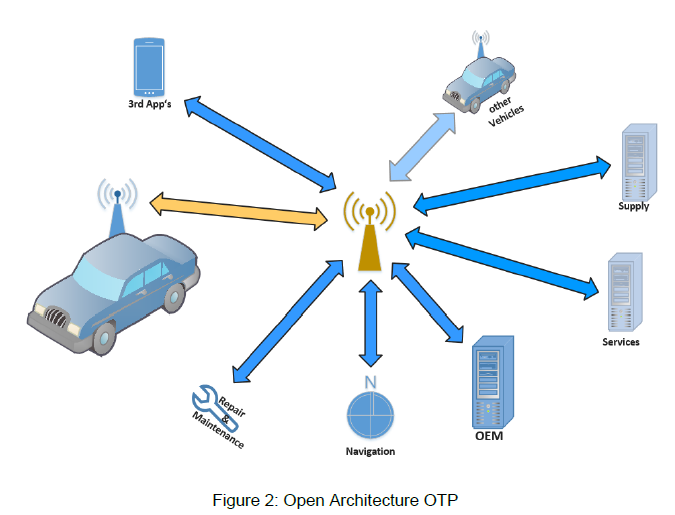
The architecture of the S-OTP ensures access to in-vehicle data and in-vehicle functions with a state-of-the-art level of security. In the S-OTP, access to...

Like what you see?

Then log-in to unlock all the content or become a member of Carmunication today!

The S-OTP (secure on-board telematics platform) is still under discussion. Although it has lost some ground next to the Data Act approach presented in February 2022 by the EU Commission, it should still be known as an alternative solution.
Important to know:
an independent data access by authorised ISPs must
– be safe and secure
– be equal compared to OEMs access
– have a reasonable and non-discriminatory pricing

Therefore, here is an overview and in the details the full study from FIA and TÜV-IT (2020)

Overview
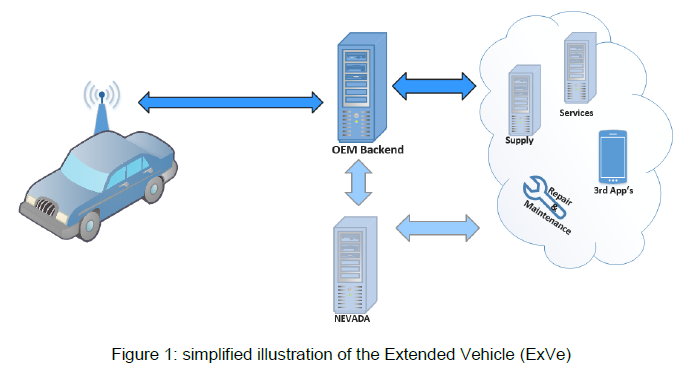
The architecture of the S-OTP ensures access to in-vehicle data and in-vehicle functions with a state-of-the-art level of security. In the S-OTP, access to vehicle data is managed by an independent and neutral controller who respects the principle of separation of duties. The S-OTP model thus addresses one of the main criticisms of the extended vehicle model (exVe), where vehicle manufacturers (OEMs are service providers and data processing responsibilities in one functional union), maintain complete control over the vehicle connectivity market, which hampers competition and innovation as they become data monopolists.


VS.


Now some OEMs allow data access via their own portals (see: Connected Vehicle Field Test / Caruso). Companies such as ‘High mobility‘ or ‘Caruso‘ enable access to this data via accessible services. But the data provided is limited in several respects, the list of deficiencies is long: e.g. with the supporting manufacturersno VW support so far, in the scope of the vehicle models, in the number of available data points, the query frequency, read-only access,…., and no standardisation.

This still means: limited, no free and equal access to data.

Details

What is the extended vehicle concept?

The Extended Vehicle (ExVe) is primarily based on a digital service provider concept under full control of the OEM. The major aspect is to provide safe and secure third-party access to vehicle data by means of an off-board facility. This is a remote and secure server from where service providers can access the data, rather than directly having access to the (moving) vehicle (in an uncontrolled way).
This off-board facility provides access to vehicle data in accordance with clearly defined technical, data protection and competition rules through various interfaces and means of off-board data storage – thereby reducing safety, security and liability risks.
In order to ensure interoperability across the globe, this means of off-board data access and its interfaces must be standardised. To that end, an ISO standard (20077-1) has been developed, better known as the ‘extended vehicle’ concept.

The ExVe standards are a set ISO standards covering 20077, 20078 and 20080. Basically the 20077 describes general concepts of the Extended Vehicle, 20078 details how to retrieve data elements (“resources” in the ISO standard) in OEM specific numbering, ISO 20080 describes remote diagnostics based on an OEM specific numbering of diagnostics relevant elements like ecus or functions inside ECUs.

The extended vehicle consists of a physical road vehicle with external software and hardware extensions that are developed, implemented and managed by the vehicle manufacturer.
But beware: The vehicle manufacturers, acting here as both service providers and data controllers, maintain full control of the automotive aftermarket. Therfore hindering competition and innovation is possible as they become data monopolists.



Now please have a look to the study:


Sources

  • AFCAR  – study
  • FIA
  • TÜVIT
  • cardatafacts /ACEA
  • EU commission
Click to rate this post!
[Total: 1 Average: 4]

Written by Carmupedia Editorial Office

You might also be interested in

0 Comments

Submit a Comment

Your email address will not be published. Required fields are marked *

Q

Please rate this article

Let us know if you like this article by leaving a rating. Don't worry, it's super easy.

Click to rate this post!
[Total: 1 Average: 4]

Placeholder
Manage my notifications

Your member panel

From here you have full control over your profile

My bookmarks

[user_favorites]

[clear_favorites_button]

Are you missing something here?

Feedback
Q